


Global Horizons
In this issue, the author opens by observing that 2025 did not end well: it was a year in which conflict and human suffering continued to impose a deadly toll across the world, and might, not dialogue, was the preferred option.
The Trump administration’s National Security Strategy (NSS) released during the month essentially put together the threads of the actions it has pursued over the past year. US core interests were defined, outlining a “roadmap to ensure that America remains the greatest and most successful nation in human history”. The writing on the wall is clear: for the US today, the ends justify the means. This reality was on stark display with the abduction of Venezuelan President Maduro and his wife from Caracas in a military operation early in the new year. Other nations were put on notice and warned that Trump “does what he says”.
The war in Ukraine showed little sign of abating, as European nations struggled to maintain their role in any final agreement on ending the war. Germany signalled resolve to restore its prime position in Europe; French President Macron reached out to China with the focus on safeguarding the international system.
In Gaza, the West Bank and southern Lebanon, Israel continued to act with impunity. The humanitarian situation in Gaza deteriorated. Other conflicts in Africa persisted. China got into the act of promoting a resolution to the Cambodia-Thailand border conflict.
In China, the Politburo of the CPC claimed significant achievements in building national power in the areas of economy, technology, and defence over the past five years. The IMF welcomed China’s contribution to aggregate global growth but also identified areas where the Chinese economy requires rebalancing.
China continued to strongly challenge US moves in its periphery, launching a massive two-day military exercise around Taiwan in late December.
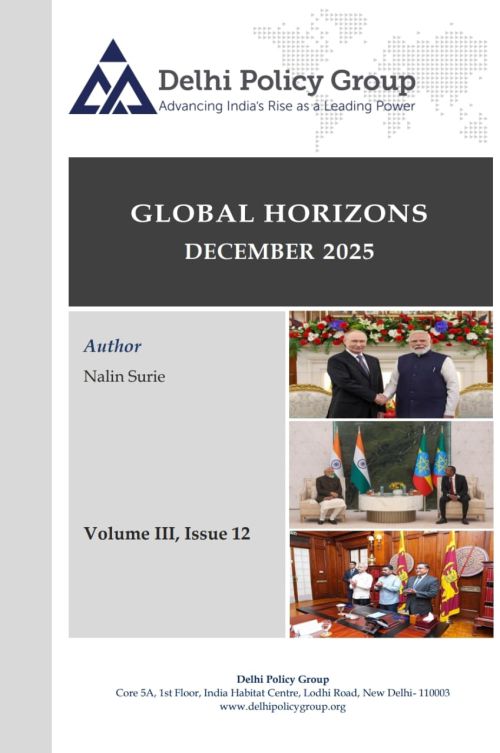
India’s diplomacy remained active and focused on essentials. President Putin of Russia paid a state visit to India, during which the special nature of this longstanding and time-tested relationship was emphasised, and areas identified for significantly enhancing bilateral economic cooperation till 2030.
The Indian Prime Minister’s visits to Jordan, Ethiopia and Omanyielded substantive outcomes.
India was the first responder following a devastating cyclone that hit Sri Lanka during the month, committing $450 million in reconstruction assistance. The situation in Bangladesh continued to be a matter of concern for India, with the real test likely to come after elections are held in that country.
The author concludes that 2026 will be a challenging year for Indian foreign, security, and economic policies. Accretion to its comprehensive national strength and maintenance of independence in decision making will have to be the way forward. There appears to be broad consensus on that in the country.
To read this issue of Global Horizons, Vol. III, Issue 12, please see the PDF attached.