


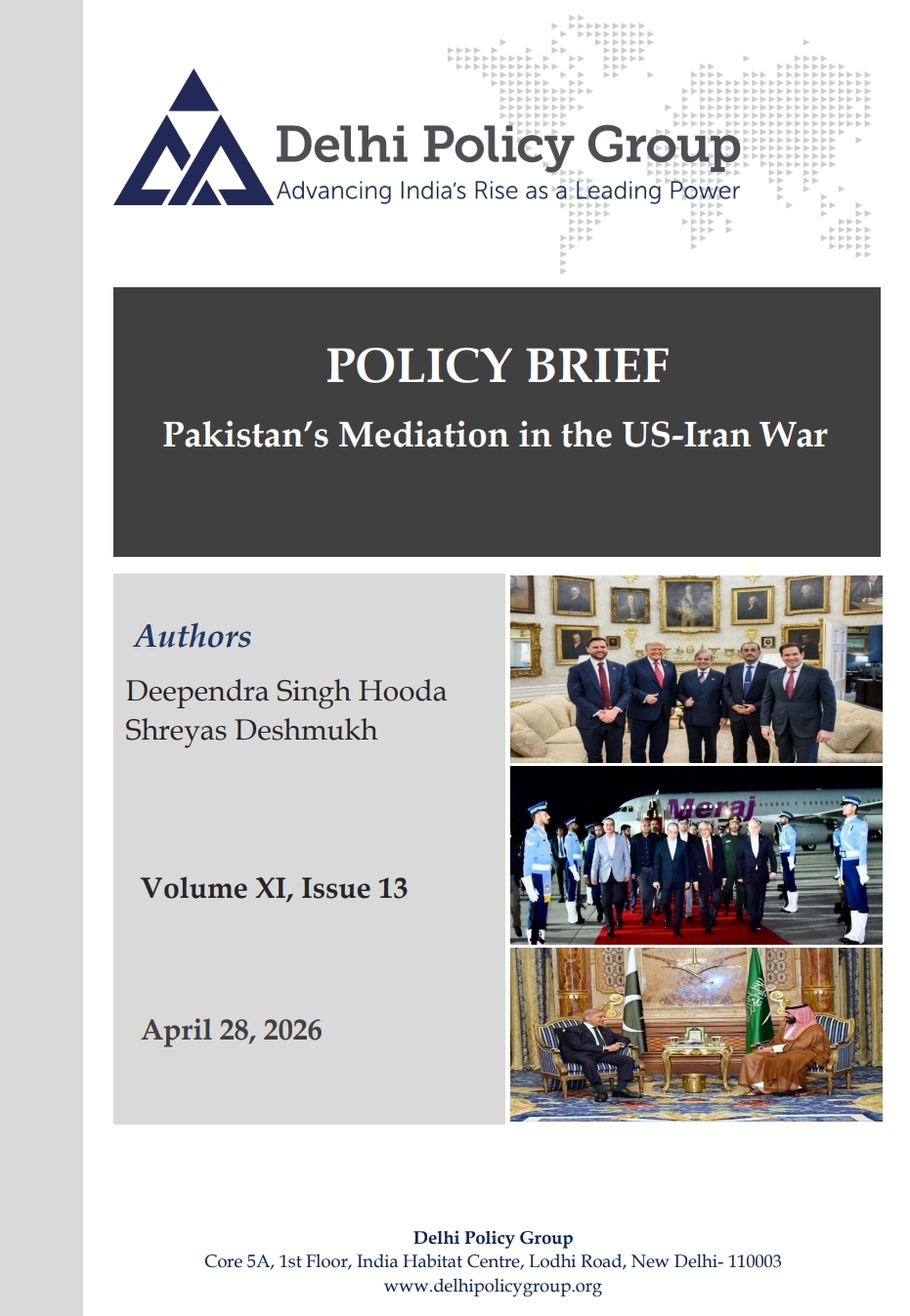
Pakistan’s Mediation in the US-Iran War
Pakistan’s emergence as an intermediary in the US-Iran war represents one of the more unexpected diplomatic developments of the current West Asian crisis. At first glance, Pakistan appeared an unlikely mediator, particularly as a state marked by economic fragility, extensive defence ties with Saudi Arabia, an undeclared war with the Afghan Taliban, and persistent rivalry with India. Yet, as the war has dragged on, Pakistan has found itself positioned at the centre of the diplomatic mediation process.
In this policy brief, the authors argue that Pakistan's mediation role has been enabled not by its neutrality, but by its utility and compulsions on the one hand and its access and acceptability on the other. Pakistan’s military leadership has crafted close working channels with the Trump administration, while also retaining a functional relationship with Tehran. Pakistan’s political usefulness has come to the fore in a crisis where back-channel communication mattered most.
However, this role carries considerable risks because Islamabad lacks decisive leverage over either principal party. President Trump's deadline-driven and unpredictable negotiating style exposes Islamabad to abrupt shifts in US policy. At the same time, Iran may come to view Pakistan as a channel for American pressure rather than a neutral facilitator. The Pakistan-Saudi defence relationship creates a further structural contradiction. If the ceasefire collapses and Iran once again targets Saudi territory, Islamabad's role as mediator could become impossible to sustain. Domestically, a resumption of the conflict could sharpen sectarian faultlines, with the Shia community holding the government responsible.
For India, this development requires a dispassionate and clear-eyed assessment based on preserving its core national interests. Pakistan has clearly gained diplomatic visibility and some reputational benefit, but this should not be mistaken for durable strategic leverage. India's interests lie in the de-escalation of the war, the protection of energy and shipping routes, the safeguarding of its diaspora, and the preservation of its own channels of communication with the United States, Iran, and the Gulf states. New Delhi should certainly monitor the renewed Pakistan-US axis, but must avoid allowing Pakistan’s mediation narrative to determine its response to the ongoing crisis in West Asia.
To read this DPG Policy Brief Volume XI, Issue 13, please click “Pakistan’s Mediation in the US-Iran War”.